Tomb Raider™
- 4.9
- Rating
- 50.00K
- Installs
- $19.99
- Price
 Analysis by App-foxy
I approached Tomb Raider™ as a full-length action game rather than a quick mobile distraction, and that distinction matters from the first session. This is Lara Croft’s origin adventure adapted for Android by Feral Interactive, with the scale and seriousness I would expect from a premium console-style release. It asks for attention, patience, and a device that feels comfortable for longer play, but it also offers something many mobile action games do not: a campaign built around exploration, traversal, combat, and story instead of short repeatable rounds.
The current Android release is version 1.4RC6, and it has already attracted a 4.9 average from around eleven thousand ratings, with more than fifty thousand installs. Those figures suggest that the game has found an audience willing to pay for a substantial experience. The price is $19.99, so this is not an impulse download for everyone. I see it as a purchase for players who want a complete adventure on their phone or tablet and who are prepared to treat mobile gaming as a serious platform.
How the current Android version feels to play
What stands out immediately is the change in rhythm compared with the usual action games on Android. Instead of pushing you through tiny battles or asking you to manage energy, upgrades, timers, or a constant stream of menus, the game gives its world room to breathe. I can move through an area, look for a route, solve a problem, and then deal with danger when the situation demands it. That slower structure makes exploration feel meaningful rather than decorative.
You May Also Like

 Pandora - Music & Podcasts
Pandora’s Music Is Easy to Start, but Harder to Recover
Pandora’s strength is its low-effort path from a seed to a station. Its weak spot is how much confidence it asks you to place in connection, setup, and quiet recovery.

 8 Ball Pool
 Is Built on Rivalries, Rematches, and Routine
A close look at the rivalries, rematches, shared routines, and unanswered safety questions that turn a quick pool match into a persistent mobile community.

 Samsung Music
’s Quiet Strength Is Playing What You Already Own
Its reach comes less from spectacle than from dependable access to a personal library. That simplicity is both the app’s strongest retention engine and its ceiling.

 AccuWeather: Weather Radar
AccuWeather Review: A Quick, Clear Forecast for Everyday Decisions
For everyday plans, the best forecast is the one you can understand quickly. AccuWeather makes rain timing, radar, and local conditions easy to act on, with a few trade-offs.

 Hill Climb Racing
Why Hill Climb Racing Still Turns Crashes Into One More Run
A tiny car, a bumpy hill and one more upgrade: Hill Climb Racing keeps resurfacing because its simple chaos makes every near-miss feel personal.

 AliExpress - Shopping App
AliExpress Makes Global Shopping Feel Personal, but Shoppers Bear the Risk
AliExpress turns a global marketplace into a pocket-sized discovery engine. Its reach is useful, its shopping loop compelling, and its trade-offs easy to miss.
More From Our News Desk
View All News


The strongest part of the experience is the way Lara’s movement connects the different activities. Climbing, jumping, searching, and fighting are not separate minigames placed beside one another. They form a continuous journey. A path that looks unreachable may become useful after I notice a ledge, a climbable surface, or a different angle through the environment. This encourages me to scan spaces carefully instead of simply following the most obvious marker.
That design also explains why the game works better for people who enjoy discovery than for players who want instant action. There are stretches where progress depends on observation and positioning. If I am tired and only want a five-minute burst of combat, the experience can feel slower than a typical mobile action title. When I have enough time to settle in, however, the pauses between confrontations give the adventure its identity.
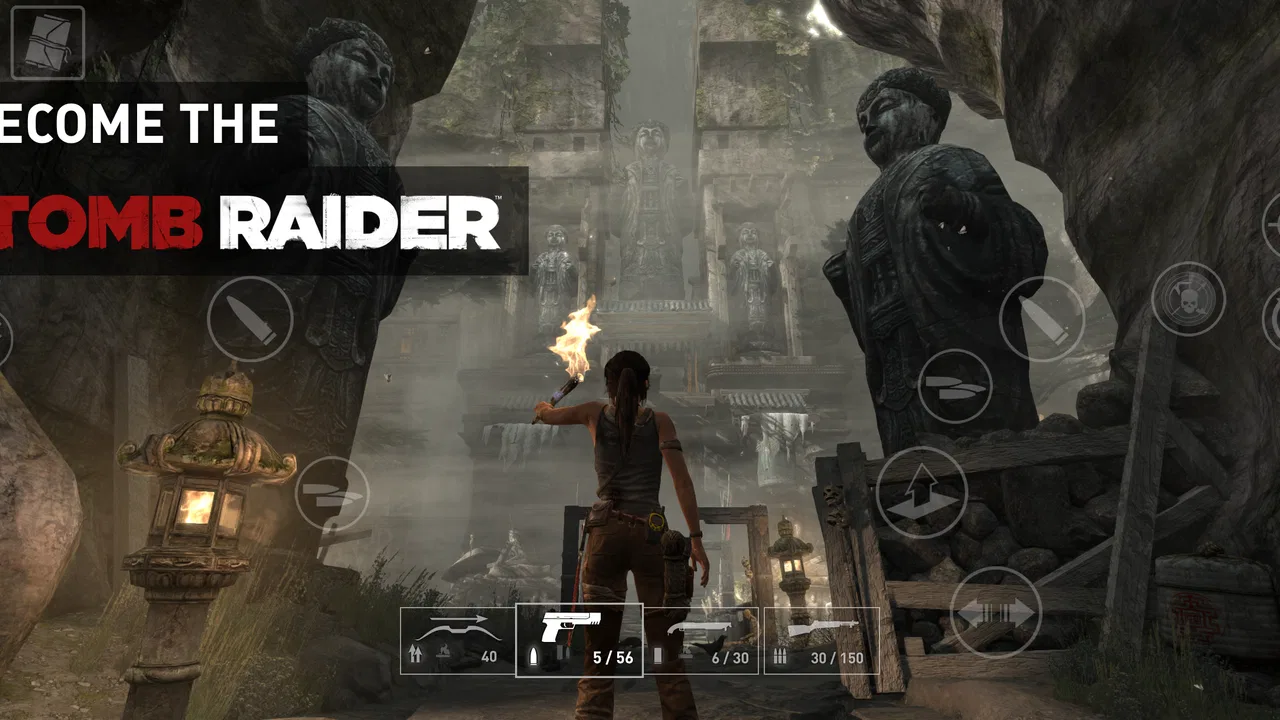
Combat is more demanding than the basic controls might suggest. On a touchscreen, movement, camera control, aiming, and evasive actions compete for space, so I had to develop a consistent grip rather than tapping randomly. I found it useful to keep my hands relaxed and make deliberate camera adjustments before committing to an attack. That small habit reduces the feeling that mistakes are caused by the interface when they are really caused by rushing.
Players using a controller should have a more natural route into the game, especially during encounters that require quick movement and accurate positioning. Touch controls remain important because the game is designed for Android, but a controller can make longer sessions less tiring and can help players who are already accustomed to Tomb Raider on other platforms. I would not make a purchase based only on the assumption that every control preference will feel identical; the best setup depends heavily on the device and the player.
A premium adventure rather than a typical mobile loop
The $19.99 price changes how I judge every part of the package. I am not asking whether the game can entertain me for a few minutes while I wait for transport. I am asking whether it gives me a coherent adventure that justifies a one-time purchase. In that context, the absence of a free-to-play structure is a major advantage. I can focus on Lara’s journey without feeling that the design is constantly steering me toward another payment or a waiting period.
That does not make the cost irrelevant. Someone who mainly plays free action games may find the initial price difficult to justify, particularly if their phone is not ideal for demanding 3D software. The game is a better fit for a player who already values premium campaigns, owns a compatible Android device, and wants to keep playing in different places without carrying a console.
The Mature 17+ rating is another practical point for families and younger players. I would not treat this as a casual all-ages recommendation simply because it runs on a phone. Parents should check the rating before purchasing, and adults who want a light, family-friendly adventure should choose something else. The rating also helps set expectations about the tone: this is presented as a serious action experience, not a cheerful platform game.
What the version number tells existing players
Version 1.4RC6 gives the current release a sense of an actively maintained product rather than an untouched port. I would read that as encouraging for people who experienced the game earlier and are deciding whether to return. Updates with a release-candidate style label usually make me pay attention to stability and compatibility, not only visible content. The practical question is whether the game feels dependable on the particular Android hardware being used.
For a new player, the version is less important than the overall condition of the release. I would install it on the device where I expect to play most often, then spend enough time moving through different types of scenes before deciding whether the controls and performance suit me. A short launch test can be misleading: an opening sequence may feel fine while later environments place more pressure on the phone and on the interface.
Existing users should also approach any updated mobile port with realistic expectations. A newer version can improve the experience without changing the fundamental design. If the original control scheme felt uncomfortable, an update may not transform it into a completely different game. The main value for returning players is the chance to experience the same adventure in a more current Android package, provided their device and preferred control method cooperate.
I would keep the game updated through the normal app store process and avoid judging it from a single session immediately after installation. Premium games often need a little personal setup: adjusting the way I hold the phone, finding a comfortable brightness level, and deciding whether headphones or a controller make a difference. Those choices are not glamorous, but they have more effect on enjoyment than many players expect.
Three practical habits that improve the experience
My first useful habit is to treat every new area as a small navigation puzzle. Rather than running straight toward the next obvious objective, I pause at a safe point and look for alternate routes, unusual surfaces, and places that seem deliberately framed by the environment. This makes exploration less frustrating and reduces the chance of overlooking the route the game expects me to notice.
Second, I recommend separating camera movement from movement whenever possible. On a touchscreen, trying to sprint, turn, aim, and react in one frantic motion produces unnecessary errors. I get better results by setting the camera first, moving into position second, and attacking only when Lara is facing the direction I intend. It feels slower for a few minutes, but it becomes much more reliable during tense encounters.
Third, I would play in planned sessions instead of treating the game like an endless feed. The adventure benefits from remembering the layout of an area and the logic behind a route. If I stop after a distracted five-minute session, I may spend the next session simply reconstructing what I was doing. A longer, focused sitting makes the exploration and story flow more naturally.
A fourth tip is especially useful for people comparing the Android release with console gaming: choose the largest comfortable screen available, but do not assume that bigger automatically means better. A tablet can make environmental details easier to read, while a phone may be more convenient for travel. The best choice is the device that lets me see the action without forcing my hands into an awkward position.
Where it fits beside other action games
Compared with free-to-play action games, this release is less convenient but more focused. I do not get the same instant accessibility or the same expectation of short, repeatable sessions. In return, I receive a structured adventure that is not built around daily chores. For me, that trade is worthwhile when I want a game with a beginning, progression, and a clear sense of place rather than a permanent service competing for attention.
Compared with platformers, it is more atmospheric and less purely about precision jumps. Movement remains central, but the surrounding spaces and the way I search them matter just as much as reflexes. Someone who wants compact levels and immediate restarts may prefer a dedicated platform game. Someone who likes examining a location before committing to a route will probably appreciate the broader design here.
Compared with playing on a console or computer, Android offers convenience but can introduce compromises. I can take the adventure to places where a larger system is impractical, yet the touchscreen may not provide the same confidence as physical controls. A controller narrows that gap, while a smaller phone screen can make visual navigation more demanding. I would choose the Android version for portability first, not because I expect it to erase every difference between platforms.
The game is also distinct from short-form action titles that reward constant aggression. Here, rushing can be a liability. Exploration, positioning, and learning how an environment works are part of the entertainment. That makes it a poor choice for anyone who dislikes pauses, backtracking, or moments where the correct response is to observe rather than attack.
Who should buy it, and who should skip it
I would recommend this to fans of story-driven action adventures, players who enjoy environmental exploration, and Android users looking for a premium game that feels substantial. It is particularly appealing if you have been waiting for a recognizable adventure format that does not revolve around microtransactions or an endless competitive ladder. The strong average rating and the size of the installed audience make it easier to see why it has connected with that group, although ratings alone cannot guarantee that the controls will suit every device.
I would hesitate to recommend it to someone who plays only in very short bursts, dislikes touch controls, or expects every mobile purchase to be inexpensive. I would also skip it if my phone is already uncomfortable with demanding games, since a premium campaign is not much use if I spend the whole time fighting heat, battery drain, or an awkward grip. In that situation, a lighter action game or a platform built around physical controls may be a better match.
Families should take the Mature 17+ classification seriously, and casual players should understand that this is not designed as a quick children’s game. The price also means that the usual “download it and see” approach is less forgiving. I would first consider whether I genuinely want a complete action adventure, then check that my preferred way of playing—touchscreen, controller, phone, or tablet—is realistic for long sessions.
Remaining friction in everyday use
The biggest potential weakness is not the concept but the mobile interface. Touch controls can make a sophisticated action game feel less precise than it would with a controller. Even when the layout is sensible, my fingers can obscure part of the screen, and a small accidental movement can send Lara in the wrong direction. This is manageable, but it is also the first thing I would test before committing to the full price.
Long sessions create another trade-off. A phone is wonderfully convenient, yet the same compact design that makes it portable can make a large adventure less comfortable over time. I may begin a session on a train or during a break, then discover that I would rather continue at home with a larger screen and a steadier grip. That does not undermine the Android release, but it does mean portability and comfort are not always the same thing.
The game’s deliberate pacing can also be mistaken for a lack of action. Players who arrive expecting uninterrupted combat may interpret exploration as downtime. I think that would be an unfair reading of the design, but it is still a genuine mismatch for some people. The adventure asks me to be curious, and curiosity is not something every action player wants from a mobile game.
Finally, the premium format places more responsibility on the buyer. There is no reason to expect the game to behave like a free app that can be abandoned without consequence. I would spend time evaluating the device, controls, and rating before buying. That small amount of preparation is worthwhile, but it is part of the ownership decision and should not be ignored.
What I would watch as the release develops
With version 1.4RC6 as the current build, I would watch how future maintenance affects compatibility, controls, and the general reliability of the Android experience. I am less interested in flashy additions than in whether the game remains comfortable to play across newer devices and whether returning players continue to find the release dependable. For a premium port, steady support can matter more than a long list of new features.
I would also pay attention to how players with different setups describe the experience. A controller user, a tablet player, and someone using a compact phone may effectively be reviewing three different control environments. That is why I would not let a single enthusiastic or negative reaction decide the purchase for me. The important comparison is between the reviewer’s hardware and my own.
The release date of February 10, 2026 places it in a relatively current part of the Android catalog, so I would judge it as a modern mobile adaptation rather than an old game simply being left available. That makes the expectations clearer: convenience, sensible maintenance, and a control scheme that respects mobile play all matter alongside the adventure itself.
My final view is positive, with a clear condition. Tomb Raider™ is worth considering when you want a serious, premium action adventure on Android, not when you are searching for a disposable time-killer. Feral Interactive has brought Lara’s origin journey into a format that can work remarkably well when I give it a proper screen, a comfortable grip, and enough uninterrupted time. The price, Mature 17+ rating, and touch-control compromises will narrow its audience, but for the right player those are manageable trade-offs. I would recommend it to a friend who values exploration and a complete campaign, while advising anyone uncertain about mobile controls to test that part of the experience before making the purchase.
FAQs for Tomb Raider™
01What is Tomb Raider™ about?
Tomb Raider™ is an action-adventure game centered on Lara Croft, an archaeologist who explores dangerous ruins, solves environmental puzzles, and survives intense combat encounters. Depending on the version available for your device, the game may focus on Lara’s origins or adapt classic Tomb Raider exploration. Expect a combination of platforming, story-driven missions, hidden collectibles, and challenging environments rather than a simple arcade experience.
02Is Tomb Raider™ free to download and play?
The availability and pricing of Tomb Raider™ can vary depending on whether you are using Android or iOS, as well as the specific edition published in your region. Some versions are premium purchases, while related Tomb Raider titles may use free-to-play systems with optional purchases. Before downloading, check the store listing carefully for the price, in-app purchases, advertisements, and any subscription requirements.
03Does Tomb Raider™ require an internet connection?
An internet connection may be needed for the initial download, account verification, updates, cloud features, or purchases. After installation, some versions allow parts of the campaign to be played offline, but this is not guaranteed for every edition or device. If offline access is important to you, review the official store description and test the game after installation before relying on it during travel.
04What devices are compatible with Tomb Raider™?
Compatibility depends on the particular Tomb Raider™ release, because different editions have different graphics requirements, operating-system support, and control systems. Check the official Google Play or App Store page for the minimum Android or iOS version, required storage, and supported devices. Older phones and tablets may install the game but still experience reduced performance, longer loading times, overheating, or occasional crashes.
05Is Tomb Raider™ suitable for children?
Tomb Raider™ is generally aimed at teenagers and adults rather than very young children. The game can include combat, weapons, dangerous situations, frightening environments, and mature story themes, depending on the edition. Parents should review the age rating, content descriptors, and purchase settings before allowing access. It is also worth checking whether the version includes advertisements, online features, or optional in-app purchases.
Pros
- Atmospheric exploration with memorable ruins
- caves
- and scenic environments.
- Responsive controls support both touchscreen play and compatible controllers.
- Frequent checkpoints reduce frustration after difficult platforming sections.
- Strong sense of progression through weapons
- skills
- and collectible upgrades.
- Cinematic presentation makes Lara’s journey feel engaging and adventurous.
Cons
- Some touchscreen controls feel imprecise during fast combat or platforming.
- Camera movement can become awkward in narrow areas and during jumps.
- Several collectibles require substantial backtracking to find later.
- Combat encounters may feel repetitive after extended play sessions.
- The game can consume significant battery during longer adventures.

Tomb Raider™
Gallery